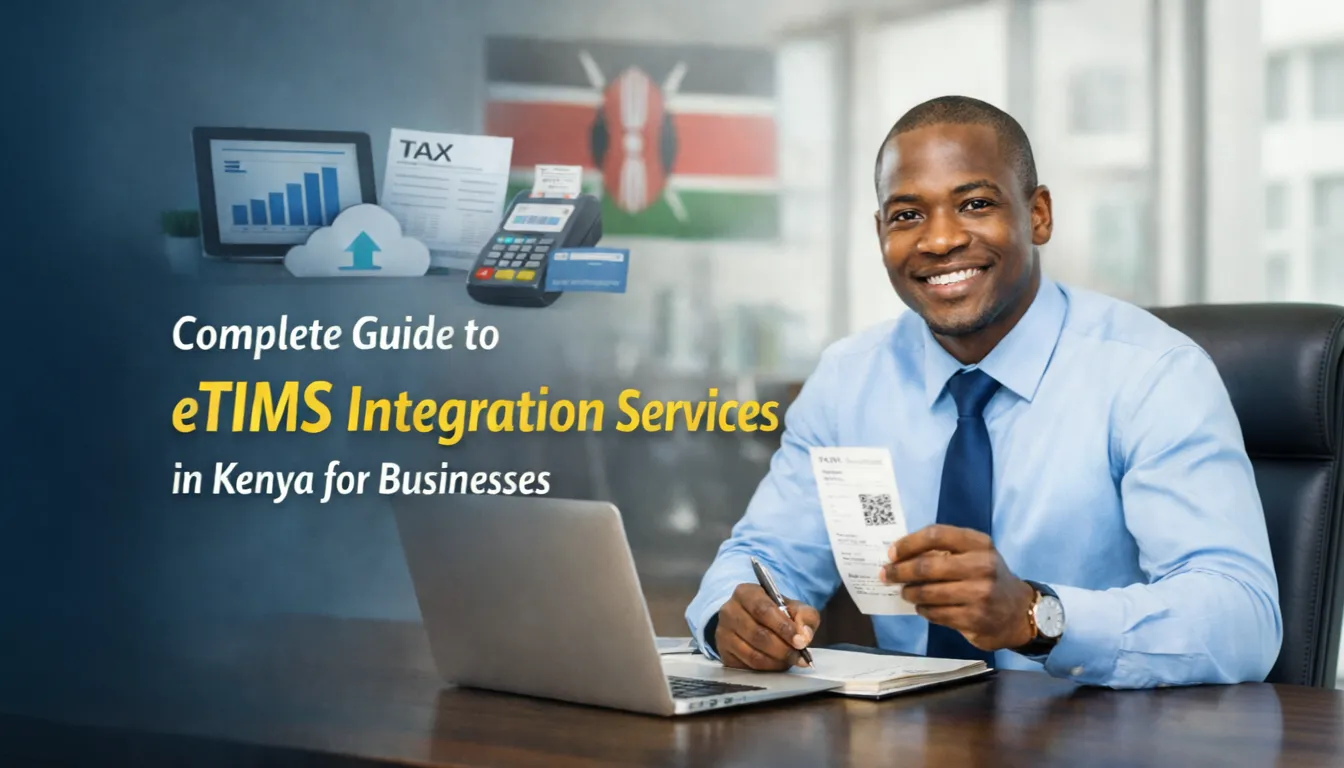
If you’re running a business in Kenya today, compliance isn’t something you can afford to treat casually anymore. Regulations are tightening, reporting expectations are evolving, and systems like eTIMS are becoming part of everyday operations.
Now, on paper, integrating with eTIMS might sound like a straightforward technical task. But in reality? It’s where many businesses hit friction—data mismatches, system compatibility issues, delays in reporting… it can get messy quite quickly.
That’s exactly why eTIMS Integration Services in Kenya are gaining so much attention. Businesses are realising that proper integration isn’t just about compliance—it’s about making sure their financial and operational systems actually work smoothly together.
In this guide, we’ll break down what eTIMS Integration Services involve, why they matter, and how businesses can approach this in a way that avoids unnecessary headaches.
What Is eTIMS and Why Does It Matter?
eTIMS (Electronic Tax Invoice Management System) is designed to digitise tax invoice reporting and improve transparency between businesses and tax authorities.
But here’s the key thing—eTIMS isn’t just another compliance requirement. It changes how businesses generate, validate, and report invoices.
Without proper integration, businesses often end up handling processes manually, which increases the risk of errors and non-compliance.
This is where eTIMS Integration Services in Kenya become essential—they ensure that your existing systems, like ERP or accounting software, communicate directly with eTIMS without disruption.
Why Businesses Are Investing in eTIMS Integration Services
- Compliance Is No Longer Optional
Regulatory compliance is becoming stricter, and manual reporting simply doesn’t meet the required standards anymore.
Businesses need automated, accurate, and timely reporting—and that’s exactly what eTIMS Integration Services provide.
- Reducing Manual Work
Without integration, teams often have to duplicate efforts—entering the same data in multiple systems.
Integration eliminates this repetition, saving time and reducing errors.
- Avoiding Costly Mistakes
Incorrect or delayed tax reporting can lead to penalties.
With proper integration, businesses can ensure that data is accurate and submitted on time, minimising risks.
- Improving Operational Efficiency
When systems are connected, processes become smoother.
Invoices are generated, validated, and reported automatically, allowing teams to focus on more important tasks.
How eTIMS Integration Works in Practice
- Connecting ERP and Accounting Systems
The first step is linking your existing ERP or accounting system with eTIMS.
This ensures that invoice data flows directly from your system to the tax platform without manual intervention.
- Data Mapping and Validation
Not all systems use the same data formats.
Integration involves mapping your internal data fields to eTIMS requirements, ensuring compatibility and accuracy.
- Real-Time Reporting
Once integrated, invoice data can be transmitted in real time.
This improves transparency and ensures compliance with reporting timelines.
- Error Handling and Monitoring
No system is perfect.
That’s why Best eTIMS Integration Services in Kenya include monitoring tools to identify and resolve errors quickly, ensuring continuous compliance.
Common Challenges Without Proper Integration
Let’s be honest—many businesses try to manage eTIMS manually at first.
It usually starts with good intentions, but over time, problems begin to show.
- Data Inconsistencies
When data is entered multiple times, discrepancies are almost inevitable.
- Delayed Reporting
Manual processes slow things down, increasing the risk of missing deadlines.
- Increased Workload
Teams spend more time on compliance tasks instead of focusing on business growth.
- System Conflicts
Without proper integration, systems may not align, leading to operational inefficiencies.
This is why investing in eTIMS Integration Services in Kenya early can save businesses from long-term complications.
Key Features of Effective eTIMS Integration Services
- Seamless System Integration
A good integration solution ensures that your ERP, accounting system, and eTIMS work together without disruption.
- Automation of Processes
From invoice generation to submission, automation reduces manual effort and improves accuracy.
- Compliance Assurance
Integration ensures that all transactions meet regulatory requirements, reducing the risk of penalties.
- Scalability
As your business grows, your integration solution should be able to handle increased data volumes and complexity.
Real Benefits Businesses Experience
Faster Operations
Automation speeds up processes, reducing delays and improving efficiency.
Better Accuracy
Integrated systems reduce human error, ensuring data consistency.
Improved Compliance
Businesses can meet regulatory requirements confidently and consistently.
Reduced Stress
Let’s be real compliance can be stressful. Proper integration makes it manageable.
Why Choose Onebit Solution for eTIMS Integration Services?
When it comes to something as critical as tax compliance, you don’t want to rely on guesswork or quick fixes. Onebit Solution approaches eTIMS Integration Services in Kenya with a level of precision and practicality that makes a real difference. They don’t just connect systems—they ensure those systems actually work together in a way that makes sense for your business.
What sets them apart is their ability to understand both the technical and operational sides of integration. They look at how your current processes function, where the gaps are, and how eTIMS can be integrated without disrupting your workflow. It’s not rushed, and it’s definitely not generic.
Their experience in delivering Best eTIMS Integration Services in Kenya means they can anticipate challenges before they become problems. With a strong focus on accuracy, compliance, and long-term reliability, Onebit Solution helps businesses integrate eTIMS with confidence—and without unnecessary complications.
Conclusion
eTIMS integration is quickly becoming a necessary step for businesses operating in Kenya, not just for compliance but for smoother and more efficient operations. Without proper integration, managing tax reporting can become time consuming, error prone, and stressful for teams. This is why investing in eTIMS Integration Services in Kenya is a practical and forward-thinking decision.
By connecting systems, automating processes, and ensuring accurate data flow, businesses can meet regulatory requirements without disrupting their daily operations. It also creates a more organised and reliable approach to financial management. While the integration process may seem technical, the long term benefits are clear and measurable.
Businesses that adopt the right integration strategy early are better prepared to handle regulatory changes and operational growth. In a compliance driven environment, having the right systems in place is no longer optional but essential for sustainable success.
For reliable eTIMS Integration Services in Kenya, call +254 703 789 789 or email info@obsl.co.ke and ensure seamless compliance with efficient system integration tailored to your business needs.
Key Takeaways
- eTIMS Integration Services in Kenya ensure accurate and automated tax reporting
- Integration reduces manual work and minimises errors
- Businesses can improve compliance and avoid penalties
- Seamless system connectivity enhances operational efficiency
- Choosing the right integration partner ensures long-term success
FAQs
What are eTIMS Integration Services in Kenya?
eTIMS Integration Services in Kenya help businesses connect their ERP or accounting systems with the eTIMS platform for automated tax reporting and compliance.
Why is eTIMS integration important for businesses?
It ensures accurate, timely tax reporting, reduces manual work, and helps businesses comply with regulatory requirements.
How long does eTIMS integration take?
The timeline depends on system complexity, but most integrations can be completed within a few weeks with proper planning.
What makes the Best eTIMS Integration Services in Kenya?
The best services provide seamless integration, automation, compliance assurance, and ongoing support for smooth operations.
Can eTIMS integration work with existing ERP systems?
Yes, most modern ERP systems can be integrated with eTIMS through proper configuration and data mapping.